


The Hero who showed us that surgery treats spinal cancer better than radiotherapy alone
In 2005, Dr Patchell and his colleagues published ground-breaking research into spinal cancer in the Lancet. For the first time, this group proved that when cancer has spread to the spine and starts to compress the spinal cord, tackling the spinal cord compression directly with surgery resulted in a better chance of stopping paralysis compared with radiotherapy alone.
Soon afterwards, the message spread worldwide, with the National Institute of Clinical Excellence (NICE) publishing guidance to NHS on how to surgically tackle metastatic spinal cord compression as soon as possible- within 24 hours of diagnosis if possible.
Last year, Dr Patchell gave a presentation explaining how he looked at current evidence, historical outcomes and the 2005 study which is available on youtube here.
The Advantage of Standing Tall
When you get in the car in the morning, you will probably feel awake, motivated and set up for the day ahead. You fasten your seatbelt and adjust your rear view mirror before setting off by tilting it upwards. Ignition on and off to go!
You arrive at work, once you’ve finally found a place to park and get on with the day. You battle with deadlines, debate with colleagues, hardly stop for lunch, surviving off coffee and you cram in as much into the day as possible until you leave for home late, tired and slightly irritable, knowing that the nose-to-tail traffic is next on the agenda. You get in the car, click in the seatbelt, check the rear view mirror and…. you tilt it downwards to see behind you….
Why the diurnal shift in rearview mirror positioning?
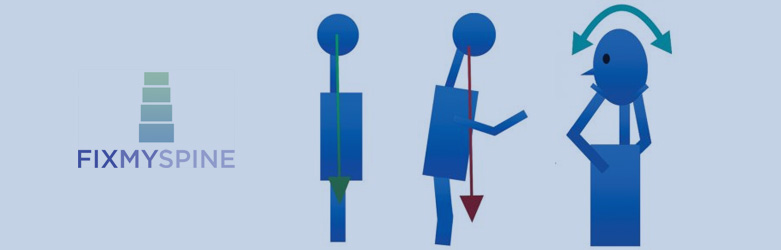
When we are sad, tired, lack energy or when we are frightened, we slouch. Slouching shortens our bodies and our reduced height means that when we get in the car, we can’t see behind us through the rear view mirror. Rather than sitting up to see properly, we simply tilt the mirror downwards and slope off home, looking forward to a glass of wine with TV.
The association between emotion and body posture is well known, having been proven time and time again by psychologists in laboratories who test volunteers exhibiting different emotions. Tests show that we stand tall when we are happy or when we need to impose ourselves for emotional reasons such as anger or indignation.
How many times has the phrase “drawing his/herself up to his/her full height” been used in literature to convey indignant protest? This phrase which associates emotion with body posture has been cited for over two hundred years.
Here’s a recent example from JK Rowling in her novel “Harry Potter and the Order of the Phoenix”:
Fred and George, the two older brothers of Ron, were testing their new Fainting Fancies on the school newbies to see whether they had the right dosage of “faint” in them. Hermione, Ron’s friend, witnessed the children dropping like flies and wasn’t impressed. She strode over to the mischievous twins and instructed them to stop experimenting on the children. The twins taunted her with jibes, asking whether she was going to put them in detention or make them write lines.
In J K Rowling’s words Hermione “drew herself up to her full height” before saying “No,” her voice quivering with anger, “but I will write to your mother.” “You wouldn’t,” said George, horrified, taking a step back from her. “Oh, yes, I would,” said Hermione grimly”.
The ankle reflex predicts outcome after lumbar disc surgery?
An ankle reflex is a test of mainly the first sacral nerve root, or S1 as an abbreviation. When S1 is working normally, a small strike of the achilles tendon , also called calcaneal tendon, with a tendon hammer causes the muscle attached to the tendon, gastrocnemius, to contract, which in turn causes the foot to flex downward.
The ankle reflex is performed as part of a neurologic examination of the legs, which is part of the investigation of sciatica. The ankle reflex is often not quite normal when the lowest lumbar disc, or L5/S1 disc, is compressing the S1 nerve root. People often ask whether this is relevant and, according to a group of spinal surgeons from Iran, it has a predictive influence on surgical outcome. They found that although roughly 90% of people who underwent L5/S1 discectomy surgery had improved outcomes, the results were not quite as good in those who did not have a normal ankle reflex before their surgery. The group also found that the weaker ankle reflexes tended to be associated with more sciatica pain prior to surgery.
Is this recent publication relevant to us? Probably. If you ever find yourself discussing the prospect of having a lumbar discectomy with a spinal surgeon, then you will want to know the likelihood of having a good outcome from the operation. One question ought to be whether your ankle reflex is normal, as this will help to predict your surgical outcome.
You can download the free publication on the ankle reflex here.
Doctor’s Orders- Go to the Pub (Med)
Pubmed, is a free online library with over 25 million scientific articles referenced. This online resource is commonly used by health professionals and health researchers alike, to search for journal articles published in relation to pretty much anything which is health-related.
For most of us, it’s a daunting idea to start trawling through medical jargon in search of answers, but, as most of the journals in pubmed are peer-reviewed, then the information on Pubmed has been filtered by a type of anti-spam medical sieve before being accessible via the pubmed website. You are therefore less likely to read un-informed literature and you are more likely to educate yourself with good quality health information.
Let’s take an example. Let’s say that a radio broadcast has just mentioned that a paralysed Polish man has learned to walk again following pioneering surgery to his severed spinal cord. This sounds fascinating and you want to learn more, so you search the news online, find the article and you scroll to the end of the article to click on related links. The links are fascinating and whet your appetite to learn more about stem cell treatments in spinal cord injuries, but your horizons are limited by the number of links available to you in relation to the article. Enter Pubmed. As soon as you start typing your query in the search box, several suggestions pop up online, as in the illustration below:

Let’s say that you decide to look at what’s available in Pubmed for stem cell transplantation (the fourth one down in the suggestion panel). You get 93,761 articles back for this search (when accessed May 19th 2016- I bet there are more now!).
Maybe you would like to reduce the number of articles to make it more manageable. The left hand column gives you filters that you can add, such as asking to only see artices with free full text available online. This option reduces the article number to 34,558 full text articles online. That’s still alot of reading material. Let’s say that you really only want to know what the latest news is, in relation to stem cell transplantation. So we can limit the articles to those published, say, in 2016 alone (that’s 605 full text articles). The left hand column allows you to limit your search to specific date ranges. But we still have a lot of articles to read, even for a five month period from January to May 2016. We can limit again, this time to, say, human studies alone (ie no animal research). We are now down to 6 full text free online articles reporting on human studies of stem cell transplantation published in 2016.
You have just executed your own online research into stem cell transplantation. Congratulations!
Here’s one of the six papers that you have successfully filtered out to read the latest on stem cell transplantation, published in March 2016 in the New England Journal of Medicine.

5 Questions to ask your Spinal Surgeon
You’ve had enough of the sciatica pain and buttock ache which is currently ruling your life. You’re surviving off pain killers and the visits to different health professionals hasn’t got you out of trouble. You’ve had an MRI scan of your lumbar spine and you have a slipped disc, or disc protrusion, which is compressing a nerve root, which is causing your sciatica pain.
In the UK, the person that you’re mostly likely to see in the NHS for sciatica is a physiotherapist. Some physios have the ability to organise MRIs and you may have established your spinal diagnosis via this route. The physiotherapist is likely to refer you to a spinal surgeon if your symptoms fail to respond to treatment.
So, you have an appointment to see a surgeon. Here are five questions that I think will help you to decide whether you wish to proceed with a lumbar discectomy operation, where to have it done and by whom.
Question 1: Are you a spinal surgeon and are you any good?
This may sound flippant, but if the answer is “yes, I perform spinal surgery and I’m good at it”, this is not necessarily the answer that you’re looking for. If you believe that practise makes perfect, then you are looking for someone who performs spinal surgery regularly i.e. 80-100% of their practice is spinal surgery. The two types of surgeons that perform spinal surgery are neurosurgeons (who operate on brains and spines, including the spinal cord itself) and orthopaedic spinal surgeons (who operate exclusively on spines).
Increasingly, surgeons have to collect data about every operation that they perform, including patient outcomes. In the UK, the British Association of Spinal Surgeons has introduced the British Spine Registry, where patients self- report their outcomes following surgery and surgeons can compare their outcomes against the UK national average. It is good practice for surgeons to collect outcome data and they should be able to quote their percentage success rate and percentage complication rate, based on their own personal numbers. Nevertheless, there may be surgeons who have not yet collected sufficient outcome data to give accurate information- there are many reasons for this, such as lack of resources to send patients reminders for their feedback. In this situation, the surgeon should be able to tell you approximately how many discectomies they have performed and discuss published surgical outcomes from spinal journals.
Question 2: Is it absolutely necessary for me to have spinal surgery?
Spinal surgery can be recommended, but, is it strictly necessary i.e. to preserve life and limb function? This means true progressive weakness of the affected limb. Sometimes, a leg can feel too painful to move- this is called “pain inhibition” rather than true weakness. If someone paid you a million pounds to move a painful leg, you’d probably move the leg. This is pain inhibition. But, for a truly weak leg, you’re not going to win that million pounds, no matter how hard you try to move the leg. Loss of function can also mean loss of bladder or bowel function. This situation is mostly discussed in the setting of a condition called cauda equina syndrome. This rare condition occurs when the spinal nerves which manage continence are compressed, usually by a lumbar disc prolapse. The symptoms may include those of an underactive bladder and at a late stage, continence issues. Most health professionals would agree that symptoms related to cauda equina compression should necessitate spinal surgery to remove the compression as soon as safely possible.
This leaves the commonest reason for seeing a spinal surgeon, which is ongoing pain, without any progressive weakness or loss of function. Spinal surgery is not necessary, but it can be a good option for pain management. If you accept that lumbar disc prolapses are probably caused by suboptimal spinal loading, due to poor posture and excessive bending, then surgical removal of the offending piece of disc material will probably improve the nerve pain immediately, but without addressing the chronic posture and spinal loading issues, there’s a strong possibility that the problem will recur. Roughly 8% of people who undergo lumbar discectomy surgery end up having the same procedure due to a recurrent lumbar disc protrusion. I suspect that this reflects how the spine is being used incorrectly, rather than the skills of the spinal surgeon.
Question 3: Do you use a microscope?
A lumbar spinal nerve root is roughly the same size and consistency as a piece of cooked spaghetti. Sometimes, it is slightly narrower. If you are very slim, then the spinal nerves will be visible at a depth of roughly 5cm. If, on the other hand, you are a heavy person, then the nerve may be a good 10-15cm vertically downwards, as you lie flat on your front under anaesthetic. Given that the spinal nerves are delicate, it’s a good idea that the surgeon can see what they’re doing. Some surgeons use their own naked eyes to see what they’re doing when they operate and some surgeons use magnifying glasses, called loupes, which can magnify the spinal anatomy by 1.5 to 6 times. Most spinal surgeons use a magnification factor of 3. The microscope, on the other hand, can magnify the surgical field over a hundred times, if this were ever required. As the microscope has a second set of binoculars for the surgical assistant, then both people are simultaneously seeing the operating field, without foreheads banging together due to trying to look into the surgical field directly (which happens when the surgeon is wearing loupes, or naked eyes alone). The microscope also has its own illumination, so even with heavy people, a deep wound can still be well illuminated with good visibility due to the microscope magnification.
You need to be aware that when a surgeon uses a microscope to perform the spinal surgery, the surgery is called microscopic surgery. So, for lumbar discectomy surgery, the operation is called a microdiscectomy. This is not the same thing as minimally invasive, or keyhole, surgery, which can also involve a microscope. Keyhole surgery is described because of the size of the skin incisions made, not because of the use of a microscope during the operation.
Question 4: Does this hospital have access to MRI and theatre outside normal working hours, in case I have a complication after my operation?
There are some units that perform spinal surgery during daylight hours, but not during night time. There are also units that either have no on-site MRI at all, or MRI scanners which are only manned during daylight hours. The bigger units, especially those in the NHS, usually have an emergency theatre running 24 hours a day, 7 days a week, in case you should develop a small bleed around the spinal nerves after your operation, which requires urgent surgical decompression. This situation, called an epidural haematoma, happens infrequently i.e. less than 1% of the time, however, if it occurs, then surgery needs to happen as soon as safely possible to reduce the risk of permanent spinal nerve damage.
If you have your surgery in a unit where there is no functioning MRI scanner, then your urgent surgery may be delayed due to your having to be transferred to a hospital with an MRI scanner. If you have your surgery in a unit where there is no night time access to theatre, then again, you risk needing emergency transfer to a larger unit if you need to have surgery during night time hours.
Question 5: When can you do my operation and is there a shorter waiting list that I can join?
One final word of advice for those of you seeking NHS treatment- there is a “clock” called the RTT, or Referral to Treatment Time clock, which starts at the point of your GP referral into the spinal service. Your spinal consultation needs to occur within a specific timeframe, and your spinal treatment needs to be completed within a specific timeframe too. There are published RTT League Tables and hospitals like to be seen to be performing well by operating within the RTT guidelines set by government.
If you decide to pay for your initial spinal surgical consultation privately, but wish to have surgery in the NHS, it’s a good idea to ask your GP to refer you into the NHS spinal service while you pay for your private consultation- the GP NHS referral keeps your place in the RTT queue. Also, it’s OK to ask to see the spinal surgeon with the shortest waiting list in the NHS as some surgeons’ waiting lists can be a lot longer than others (this is not necessarily a reflection on how popular they are! Influencing factors include number of operating lists, length of operating list time and whether the spinal surgeon tends to do lots of shorter operations such as lumbar discectomies (4 people on a day’s list), or lots of longer operations such as spinal deformity correction( 1-2 people on a day’s list).
Putting it all together
In conclusion, you would probably prefer to know that spinal surgery is usually a pain management option rather than a necessary procedure. You would like your surgery performed by a spinal surgeon who can see what they are doing when they operate, is experienced at doing a lumbar discectomy and can show you their outcomes to date. You would like your operation to be done in a fully-equipped hospital, so that in the unlikely event of you needing an urgent second operation while you are still in hospital, there is an on-site MRI facility for scanning your back at any time of day or night, as well as the option to undergo surgery at night if the need should arise. If your job’s on the line as you can’t work due to pain, then timing is critical to you- don’t forget to make enquiries into which spinal surgeon has the shortest inpatient waiting list and, if necessary, swap.